
COLORADO
WASHINGTON
EMDR/ART Therapy-Denver
EMDR Trauma Therapy-Washington
EMDR/ART Therapy-Fort Collins
Couples Therapy/Discernment-Denver
Couples Therapy/Discernment-Ft Collins
Couples Therapy-Seattle
Grieving the Loss of a Relationship: Healing Betrayal, Divorce, and Estrangement

Work With Me
a licensed professional counselor with 15 years of experience in the field. I earned my B.S. in Psychology and Master’s in Counseling from Colorado State University and am the proud owner of Path to Growth Therapy and Trabelsi Coaching & Consulting.
I provide therapy for individuals and couples across Colorado and Washington, and mindset coaching and consulting services to clients worldwide. My specialties include grief, trauma, anxiety, life transitions, and relationship challenges. With a strengths-based, trauma-informed, and action-oriented approach, I help clients move beyond challenges and step into lasting healing and growth.

Meet Sheila
August 26, 2025
Table of Contents
- Grief Beyond Death
- The Hidden Nature of Non-Death Grief
- Types of Relationship Loss That Involve Grief
- Why Relationship Loss Hurts So Deeply
- Attachment Styles and Relationship Grief
- Journaling as a Tool for Processing Relationship Grief
- Journal Prompts for Exploring Grief Through an Attachment Lens
- Grieving Loss Grounding Practices by Attachment Style
- How Therapy Can Support Healing After Relationship Loss
- FAQs
- Your Grief Is Valid
Grief Beyond Death
When most people hear the word grief, they immediately think of death. But grief is not limited to the loss of life. It is the emotional experience of losing something deeply meaningful and is often connected to grieving the loss of a relationship, whether that relationship is with a partner, a family member, or even a former version of yourself. This kind of grief often shows up in relational spaces, including conversations that happen in couples therapy, when trust, safety, or emotional connection has been disrupted.
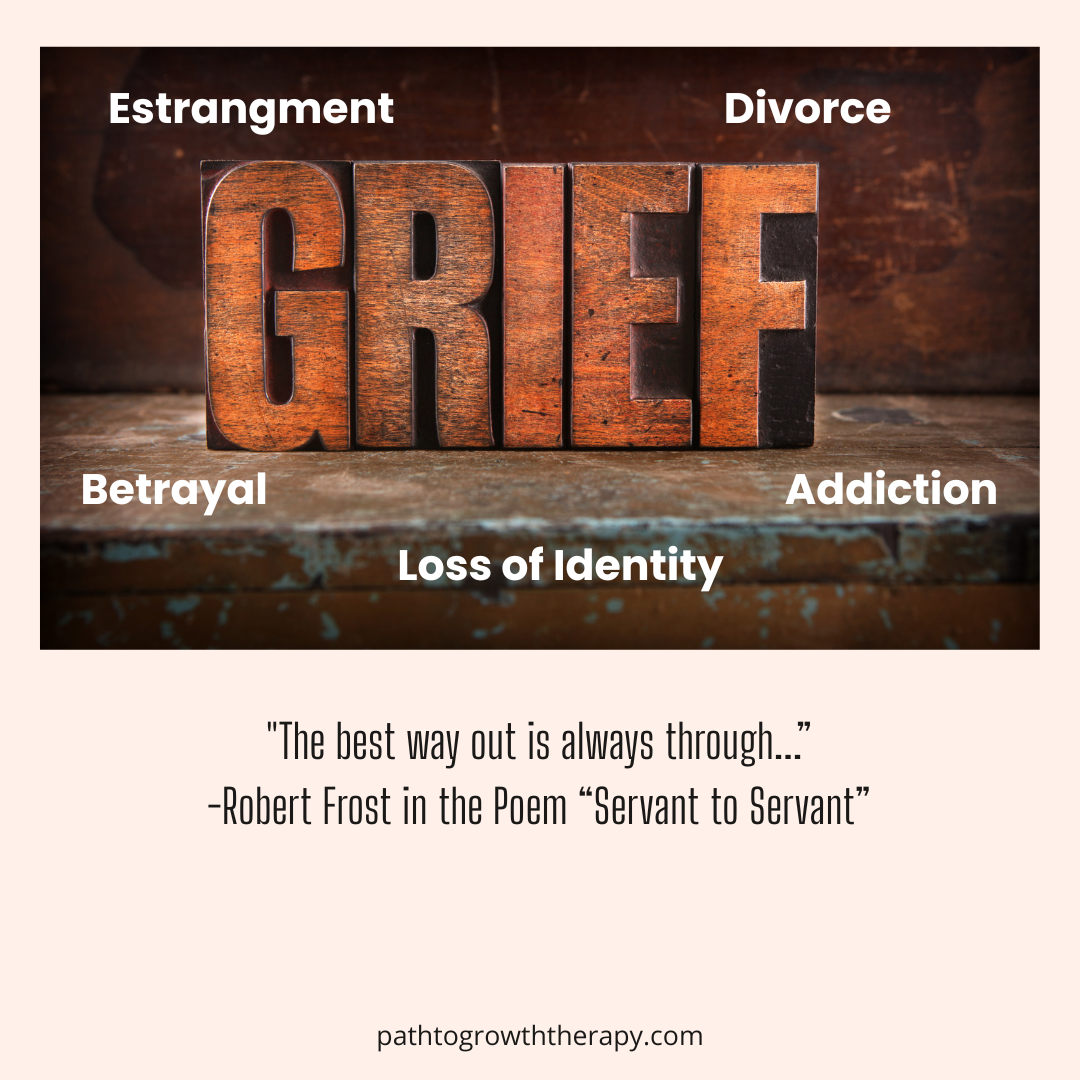
Betrayal in a marriage, the end of a long-term relationship, addiction that erodes trust and connection, estrangement from family, or the loss of a future you once envisioned are all forms of relationship loss. Relationship grief deserves acknowledgement and care, even when there is no funeral or socially recognized ritual to mark the loss, and often benefits from bespoke therapy that is tailored to the complexity of relational and attachment-based wounds.
Because these experiences do not fit traditional definitions of bereavement, many people feel they do not have the right to grieve. This often leads to unspoken pain and isolation. If you are carrying deep sadness without a reason others seem to understand, this grief is still valid.
This blog explores grief beyond death, with a focus on betrayal, trauma, divorce grief, estrangement, and other relational losses that often go unseen.
The Hidden Nature of Non-Death Grief
Psychologists recognize grief as a natural response to any significant loss. Researcher Kenneth Doka introduced the concept of disenfranchised grief, which refers to grief that is not openly acknowledged or socially supported. This is common when someone is navigating the aftermath of an affair, emotional abandonment, or relational rupture.
A person experiencing betrayal may grieve the loss of trust, safety, and the relationship they believed they had. Because the other person is still alive, the grief is often minimized. This lack of validation is explored more deeply in grief that isn’t validated by society.
Relational losses such as divorce, betrayal, or estrangement are particularly painful because the person being grieved often remains present in some way. Co-parenting, shared family systems, or ongoing contact can keep the loss active. This ongoing exposure can leave people feeling stuck in cycles of emotional pain that resemble complicated grief after relationship loss.
Types of Relationship Loss That Involve Grief
- Betrayal Trauma
Discovering infidelity or experiencing betrayal in a close relationship can fundamentally disrupt a person’s sense of reality. The loss includes trust, emotional safety, and the shared meaning of the relationship. Many individuals experiencing betrayal trauma report intrusive thoughts, emotional dysregulation, and difficulty trusting again.
Trauma-informed approaches such as EMDR therapy for trauma recovery can be especially effective in processing the emotional impact of betrayal and restoring a sense of internal stability.
- Divorce or Relationship Loss
Divorce grief extends far beyond legal separation. It includes the loss of shared routines, plans, financial security, and often social identity. Divorce can be especially destabilizing for individuals whose sense of worth or stability is closely tied to achievement and performance. These patterns often overlap with high achiever burnout and emotional overload.
- Addiction-Related Loss
Addiction creates ongoing relational grief for both the individual struggling with substance use and their loved ones. Partners and family members often grieve the person their loved one was before addiction altered the relationship. Even during recovery, grief for lost time, broken trust, and emotional absence may remain.
- Estrangement from Family
Family estrangement is one of the most complex forms of relationship grief. Whether chosen for self-protection or imposed by circumstance, estrangement often involves grieving what the relationship was, what it never became, and the loss of family connection itself. Many people navigating estrangement resonate with the experience of grieving someone who hurt you.
- Loss of Identity or Dreams
Sometimes the grief is not only about losing a relationship, but about losing a sense of self. Identity loss can follow divorce, infertility, health changes, or career shifts. These experiences are common during major life transitions that disrupt identity and purpose and often require intentional emotional processing.
Why Relationship Loss Hurts So Deeply
Relational loss threatens our fundamental need for attachment and belonging. Emotionally Focused Therapy emphasizes that secure emotional bonds are essential for well-being. When those bonds rupture through betrayal, separation, or estrangement, the emotional pain can feel overwhelming.
Neuroscience research shows that social rejection activates the same regions of the brain as physical pain. This explains why grieving the loss of a relationship can feel intense, persistent, and at times unbearable.
Unlike grief related to death, relationship grief often involves uncertainty. The person is still alive. There may be ongoing contact. The possibility of reconciliation may linger. This ambiguity can prolong the grieving process and make closure difficult.
Attachment Styles and Relationship Grief
Attachment styles influence how people experience and cope with relational loss. Humans are wired for connection, and the end of a significant bond naturally activates attachment systems.
Individuals with avoidant attachment may minimize emotional pain or disconnect from their feelings. Those with anxious attachment may experience heightened rumination, longing, and fear of abandonment. Disorganized attachment can result in fluctuating emotional responses that feel confusing and overwhelming.
When attachment wounds are present, emotional regulation in relationships often becomes more difficult. Learning to identify and respond to emotional needs with compassion is a key part of healing relationship grief.
Journaling as a Tool for Processing Relationship Grief
Reflective journaling can help externalize grief that feels invisible or overwhelming. Writing allows you to slow down, name losses, and honor emotional experiences without judgment.
Consider the following prompts:
- What did I lose when this relationship changed or ended?
- What parts of my identity or sense of safety feel impacted?
- What needs acknowledgment or care right now?
This process helps transform unspoken grief into something that can be processed and integrated.
Journal Prompts for Exploring Grief Through an Attachment Lens
No matter your Attachment type, these targeted journal prompts will help you to lean in, stop avoiding, and begin truly grieving the loss of the relationship.
- Avoidant/Dismissive Attachment:
“What feelings am I tempted to push away right now? What might happen if I allowed myself to feel just 10% of that emotion in this moment?” - Anxious/Preoccupied Attachment:
“When I notice myself replaying the loss, what is the deeper need I’m longing for (safety, reassurance, closeness)? How can I give a small piece of that to myself today?” - Disorganized Attachment:
“When my emotions feel chaotic or conflicting, what would it look like to name just one feeling clearly and give it space without judgment?”
Grieving Loss Grounding Practices by Attachment Style
Together with the journal prompts above, these create a balanced toolkit — cognitive reflection and somatic grounding to help you grieve the loss of a relationship.
- Avoidant/Dismissive Attachment
Practice: Try a 5-4-3-2-1 Sensory Scan (name 5 things you see, 4 things you feel, 3 things you hear, 2 things you smell, 1 thing you taste). This gently brings you into the body and softens the tendency to escape into logic or distraction. - Anxious/Preoccupied Attachment
Practice: Place your hand over your heart and repeat a self-reassurance mantra, such as: “I am allowed to grieve at my own pace. I am safe in this moment.” Pair it with slow, paced breathing (inhale for 4, exhale for 6). - Disorganized Attachment
Practice: Use anchored movement, like pressing your feet into the ground while sitting, or rocking gently back and forth. Naming aloud: “Right now I am safe. This is grief, not danger.” helps create structure when emotions feel chaotic.
How Therapy Can Support Healing After Relationship Loss
At Path to Growth Therapy, we understand that grief extends beyond death. Grieving the loss of a relationship often requires specialized, trauma-informed support. Sheila Trabelsi works with individuals and couples navigating betrayal trauma, divorce grief, estrangement, and complicated relational loss.
Therapy can help you:
- Process grief without minimizing your experience
- Rebuild trust and self-identity after betrayal
- Develop tools for coping with ongoing or ambiguous loss
- Strengthen emotional resilience and relational patterns
Our services include individual therapy, extended sessions, and intensive formats designed to support deep and meaningful healing.
FAQs
1. Why does relationship loss feel so painful?
Relationship loss can threaten our need for connection, attachment, and belonging. Research shows that social rejection and emotional loss activate many of the same brain regions associated with physical pain, which is why the grief can feel overwhelming and difficult to move through.
2. What is betrayal trauma?
Betrayal trauma occurs when trust is broken in a significant relationship, such as through infidelity, deception, or emotional abandonment. People often grieve the loss of trust, emotional security, and the relationship they believed they had, making healing a complex process that may require intentional support.
3. How long does divorce grief last?
There is no set timeline for divorce grief. Healing varies depending on factors such as the length of the relationship, the circumstances of the separation, personal resilience, and available support systems. It is common to experience waves of grief that gradually become more manageable over time.
4. Can family estrangement cause grief?
Yes. Family estrangement is a significant form of relationship loss that can lead to deep grief. Many people mourn both the relationship that existed and the connection they hoped to have. Because estrangement is often misunderstood by others, the grief can feel especially isolating.
5. How can Online therapy help after betrayal, divorce, or estrangement?
Online Therapy provides a supportive space to process grief, rebuild trust in yourself and others, strengthen emotional resilience, and develop healthier relationship patterns. A trauma-informed therapist can help you navigate the complex emotions that often accompany relationship loss and support your healing journey.
Your Grief Is Valid
Grief is not reserved for death. It exists in betrayal, divorce, estrangement, and futures that did not unfold as planned. These losses matter, and they deserve care.
If you are in Denver, Seattle, or the surrounding areas and are navigating relationship grief, you can schedule a consultation today with a licensed professional counselor Colorado. If you are seeking coaching services outside these locations, you can learn more and schedule a session here.
Your pain is real, your grief is valid, and your healing matters.
Leave a Reply Cancel reply
| Originally DESIGNED BY ADP
© 2026 PATH TO GROWTH THERAPY
| Privacy Policy
HOURS: Sundays 8 AM-1 PM
Monday 10 AM-3 PM
Tuesday 10 AM-3 PM
Wednesday 10 AM-3 PM
Thursday 10 AM-12 PM (varied)
Fridays/Saturdays Closed/Intensives Only
Limited Availability outside these hours.
REVIEW US HERE
(970)-344-9177
pathtogrowththerapyllc@gmail.com
| Website Disclaimer
| Terms

