What is Complicated Grief?
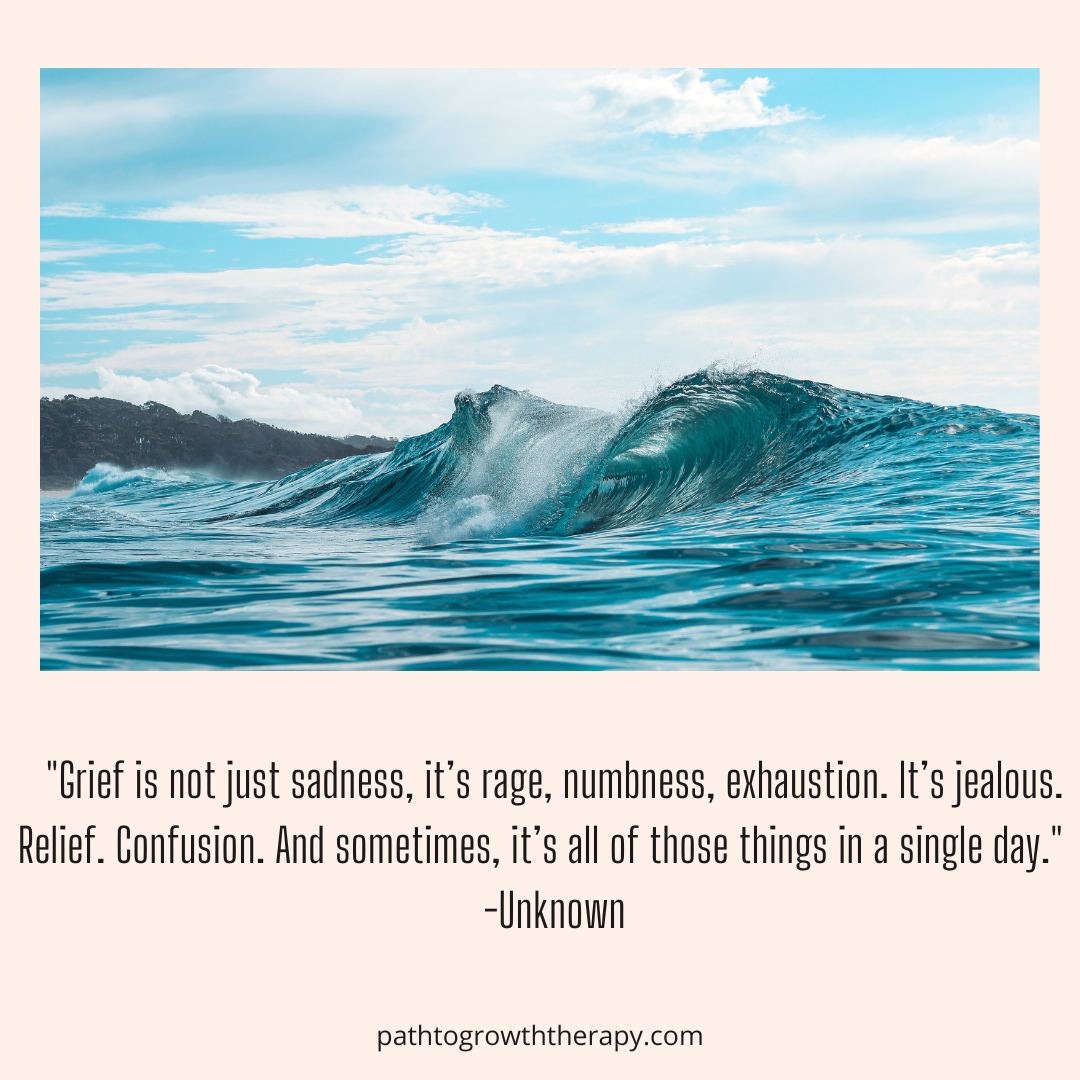
Table of Contents
- Internalized Pressure: Complicated Grief That Comes with Expectations
- Why You Might Feel “Stuck” in Grief
- What Does “Being Over It” Even Mean?
- Journal Prompts for Holding Grief Differently
- Questions to Ask Yourself If You Feel “Stuck” in Complicated Grief
- CBT-Based Exercise: Reframing Grief Thoughts
- Somatic Exercise: Grounding Touch for Grief
- You’re Not a Burden. You’re Grieving.
- You Don’t Have to Fight Yourself to Heal from Grief
- Frequently Asked Questions
- Ready to Work Through Complicated Grief Together?
Healing Through Grief and Loss Series
Grief, in general, doesn’t follow a calendar so why would complicated grief? And yet, many people struggling with complicated grief find themselves haunted by a question they may not dare to ask aloud:
“Why am I still not over it?”
Maybe it’s been months or even years since your loss. Friends and family have returned to normal. Life demands have picked up. And still, your heart aches. Maybe you still cry in the quiet moments or feel a weight in your chest that just won’t lift. Perhaps you catch yourself pretending you’re okay to avoid the discomfort on other people’s faces. Feeling the burden on your own of your grief, the loss.
You’re not broken. You’re still grieving.
And grief isn’t something we “get over.” It’s something we learn to live with, love around, and maybe most importantly, carry differently. For some, that support may come through working with an online therapist in Colorado, which residents can access from the comfort of their own homes.
Internalized Pressure: Complicated Grief That Comes with Expectations
Complicated grief often comes with a secondary layer of pain: the belief that we should be further along. These messages don’t just come from the outside world; they often become part of our inner dialogue:
- “Why am I still crying over this?”
- “Everyone else has moved on; what’s wrong with me?”
- “It wasn’t even a death… why am I grieving so deeply?”
- “If I talk about this again, I’ll just seem needy or dramatic.”
These are the silent rules so many people internalize about grief. But they are myths.
Your timeline is not wrong.
Your heart is not late.
You are not too much.
If your grief feels unseen or unacknowledged, you might resonate with this reflection on when loss isn’t validated by society.
Why You Might Feel “Stuck” in Grief
Grief becomes more complicated when layered with shame, trauma, isolation, or unspoken pain. Some common complicating factors include:
- The nature of the relationship (estranged, abusive, or unresolved)
- A loss that wasn’t socially recognized (miscarriage, pet loss, loss of a future/dream)
- Lack of support or validation from others
- A loss that was sudden or unexpected
- Ongoing trauma or stress following the loss
- Feeling responsible or guilty about the loss
- Disconnection from your body or emotions
It’s not just the event of the loss, it’s everything that surrounds and follows it that shapes your grief journey.
If you’re navigating grief connected to a complicated relationship, this piece on grieving someone who hurt you may feel relevant.
And if trauma is intertwined with your loss, learning about different trauma approaches such as EMDR and art therapy may also help different trauma therapy approaches.
What Does “Being Over It” Even Mean?
This phrase—”over it“—can be so misleading. Does it mean you no longer cry? That you don’t think about the person or loss anymore? That you stop being impacted by it?
Here’s the truth, ready?
You can heal without erasing.
You can function and grieve.
You can feel joy and sadness in the same breath.
Healing doesn’t mean forgetting. It means learning to hold your grief with less fear and more compassion.
Holding grief differently doesn’t mean forgetting, minimizing, or rushing to “move on.” It means creating space for your grief to exist without letting it consume you. Instead of fighting the intensity, we learn to tend to it, to notice the waves without drowning in them. This might look like journaling to understand what the grief is asking of you, reaching out for support instead of isolating, or simply sitting with your feelings without judgment. Holding grief differently invites us to live with our loss, not despite it. It’s a gentle, ongoing practice of integrating what we’ve lost into who we are becoming.
Journal Prompts for Holding Grief Differently:
- What does “getting over it” mean to me—and where did that expectation come from?
- In what ways am I still carrying this grief, and how is it showing up in my body, mind, or relationships?
- If I allowed myself to hold this grief with more compassion and less judgment, how might that look, what might change?
- What would it look like to live with this grief, rather than trying to fix or erase it?
Questions to Ask Yourself If You Feel “Stuck” in Complicated Grief
If you’re feeling judgmental or frustrated with yourself, consider journaling or reflecting on the following questions:
- Whose timeline am I comparing myself to?
- What do I believe would be “acceptable” grief right now?
- What part of me is asking for attention or validation in this grief?
- Am I trying to perform healing instead of experiencing it authentically?
- What would I say to a friend feeling what I’m feeling?
- Have I been avoiding something painful that needs space?
Two Grief Exercises to Try
CBT-Based Exercise: Reframing Grief Thoughts
Write down a self-critical thought (e.g., “I should be over this by now”).
Next to it, challenge it by writing a more compassionate, reality-based response (e.g., “Grief is not a straight line. My timeline is valid. Healing is nonlinear.”)
Repeat this regularly. Speak it out loud if it feels right. Your brain needs to hear new language to form new beliefs.
Somatic Exercise: Grounding Touch for Grief
Grief is not just emotional; it also lives in the body.
Place one hand on your heart and the other on your belly. Breathe deeply. As you inhale, imagine sending warmth and validation to the part of you that’s hurting.
Name the emotion out loud if you can. (“Sadness,” “Loneliness,” “Guilt”)
Offer this part of your compassion, like you would a child or friend. Stay with it for a few minutes, even if discomfort shows up.
You’re Not a Burden. You’re Grieving.
One of the most painful aspects of grief is feeling left behind by the world. Friends stop checking in. People get uncomfortable when you bring up your loss. You might start to censor your grief—or yourself. But pushing it down doesn’t make it disappear.
Grief needs space. Validation. A place to land.
You deserve support that honors the full complexity of your loss—not just a timeline.
You Don’t Have to Fight Yourself to Heal from Grief
If you’re tired of fighting your own grief—of battling thoughts that you’re too much, too emotional, or too behind—I invite you to take the next step.
Through compassionate online counseling services in Colorado, I support individuals navigating complicated grief with both cognitive and body-based approaches. As an experienced online therapist whom residents trust, I also offer intensive therapy sessions for those seeking deeper, focused healing support.
Together, we untangle pain, reconnect with self-compassion, and create space for healing that honors your process—not someone else’s.
Frequently Asked Questions
1. How is complicated grief different from normal grief?
Complicated grief involves prolonged or intense emotional pain that feels persistent and disruptive. It may include deep longing, difficulty re-engaging with life, or feeling stuck long after others expect you to have “moved on.”
2. How long does complicated grief last?
There is no universal timeline. Grief varies depending on the relationship, circumstances of the loss, trauma history, and available support. Healing begins when grief is met with compassion instead of judgment.
3. Can online therapy help with complicated grief?
Yes. Many people find that working with an online therapist in Colorado residents can access allows for consistent, private support while processing grief in a familiar environment.
4. What are intensive therapy sessions for grief?
Intensive therapy sessions are extended or focused sessions designed to help individuals process unresolved grief more deeply, especially when they feel emotionally stuck or overwhelmed.
Ready to Work Through Complicated Grief Together?
Whether your grief is fresh, delayed, complicated, or buried—I’m here to support your healing.
Schedule a Consult today
Email me
This blog is part of the Healing Through Grief and Loss series at Path to Growth Therapy:
- Grief: Grieving Someone Who Hurt You
- Grief Unspoken: When Loss Isn’t Validated by Society
- “It Wasn’t a Death, But It Was a Loss”: Expanding Our Understanding of Grief
- You Can Miss Someone and Be Angry With Them — That’s Normal Grief, Too
August 19, 2025
Leave a Reply


