
COLORADO
WASHINGTON
EMDR/ART Therapy-Denver
EMDR Trauma Therapy-Washington
EMDR/ART Therapy-Fort Collins
Couples Therapy/Discernment-Denver
Couples Therapy/Discernment-Ft Collins
Couples Therapy-Seattle
How Long Should You Try to Fix a Marriage?

Work With Me
a licensed professional counselor with 15 years of experience in the field. I earned my B.S. in Psychology and Master’s in Counseling from Colorado State University and am the proud owner of Path to Growth Therapy and Trabelsi Coaching & Consulting.
I provide therapy for individuals and couples across Colorado and Washington, and mindset coaching and consulting services to clients worldwide. My specialties include grief, trauma, anxiety, life transitions, and relationship challenges. With a strengths-based, trauma-informed, and action-oriented approach, I help clients move beyond challenges and step into lasting healing and growth.

Meet Sheila
July 20, 2026
Table of Contents
- Why There’s No Universal Timeline
- What “Trying” Actually Means
- Signs the Work Is Moving in the Right Direction
- When Effort Alone Isn’t Enough
- Why One Partner Can Start Without the Other
- How Intensive Couples Therapy Creates Breakthroughs
- What Individual Therapy Offers You, Regardless of Outcome
- Taking the First Step
- Frequently Asked Questions
- Final Thoughts
Every marriage goes through difficult seasons. But there’s a difference between a rough patch and a pattern that keeps repeating and knowing that difference matters.
If you’ve found yourself wondering how long you should keep trying, you’re probably not someone who gives up easily. More likely, you’re exhausted, uncertain, and looking for some honest guidance about what genuine effort actually looks like and when it’s enough.
This blog won’t hand you a deadline. But it will give you a clearer way to think through where you are, what real effort requires, and how therapy services in Colorado can help you find clarity whether your marriage heals or not.
Why There’s No Universal Timeline
You’ve probably searched for a number. Six months. A year. Three years of counseling. Some clear finish line that tells you whether to keep going or let go.
The truth is, no such number exists because the question isn’t really about time. It’s about whether both people are genuinely engaged in the process of change.
A couple can stay together for five years without ever doing the real work. Another couple can make meaningful progress in six months of honest, committed effort. What matters isn’t the clock, it’s the quality and mutuality of the effort happening inside that time.
As a licensed therapist serving individuals and couples in Colorado, I’ve worked with people who stayed too long out of fear, and others who walked away from something that had real potential because the exhaustion was mistaken for a verdict. Understanding the difference starts with getting clear on what trying actually means.
What “Trying” Actually Means
One of the most important and most honest questions you can ask yourself is: are we actually trying, or are we just staying?
Staying looks like coexisting, avoiding the big conversations, hoping things improve on their own, or showing up to a therapy session without being willing to apply anything between appointments.
Trying looks different. It means both partners acknowledge there’s a real problem. It means engaging with couples therapy or a skills-based approach with genuine participation not performance. It means having uncomfortable conversations instead of indefinitely postponing them. It means repairing after conflict rather than just waiting for the tension to fade.
It also means doing individual work. Because a relationship can only heal as much as the individuals inside it are willing to grow.
If only one person is doing all of this, that’s not a couples problem anymore. That’s one person carrying everything and that deserves its own kind of attention and support.
Signs the Work Is Moving in the Right Direction
Progress in marriage repair rarely looks dramatic. It doesn’t usually arrive as a single breakthrough moment. It shows up in smaller, quieter shifts that accumulate over time.
Some signs that genuine movement is happening include:
Conversations have a different quality. Even hard discussions carry less contempt and more curiosity. You’re still disagreeing, but you’re doing it differently.
Repair happens faster. After a conflict, you’re finding your way back to each other more quickly than before even if imperfectly.
Moments of real connection are returning. Small instances of warmth, humor, or genuine understanding that had gone quiet are beginning to reappear.
Both partners are taking personal responsibility. When each person focuses on their own patterns rather than cataloguing their partner’s failures, something real becomes possible. Understanding your own emotional triggers and responses is often what unlocks this shift.
You can imagine a shared future. It may be uncertain, but you can picture it. A complete inability to imagine any future together is worth paying attention to.
When these signs are present even partially it usually means the process is working and deserves continued investment.
When Effort Alone Isn’t Enough
There are situations where prolonged effort without change becomes its own kind of harm. Recognizing these isn’t about giving up. It’s about being honest when the foundational conditions for repair are absent.
When there is abuse. If physical, emotional, financial or sexual abuse is present, the question of “how long to try” changes completely. Safety is not a relationship problem to be solved in couples therapy in fact, couples counseling is contraindicated in abusive dynamics, as it can increase risk. Individual support and safety planning come first. Reaching out to a therapist who understands trauma and safety can be the most important first step.
When one partner is fully disengaged. A marriage cannot be repaired by one person alone. If your partner consistently refuses help, denies that real problems exist, or actively undermines any attempt at change even after honest, sustained conversation you are not failing to try hard enough. You are trying alone.
When addiction or mental health goes untreated. Couples-level work cannot carry the weight of unaddressed substance use or untreated mental illness. These require dedicated individual treatment first. Working on a marriage in the middle of active, untreated addiction is like rebuilding something on ground that keeps shifting. The trauma-informed and addiction-aware approach at Path to Growth helps clients understand how these dynamics intersect and what needs to happen first.
When contempt has taken root. Disagreement and distance are repairable. Contempt a deep, settled disrespect for your partner as a person is one of the strongest predictors of relationship breakdown. It doesn’t make repair impossible, but it does require honest acknowledgment and significant work.
Why One Partner Can Start Without the Other
One of the most common reasons people delay seeking support is the belief that counseling only works if both partners attend together. That’s a misconception worth addressing directly.
When one partner improves how they communicate, manages their emotional responses differently, and develops greater self-awareness, those changes influence the relationship even without the other person in the room.
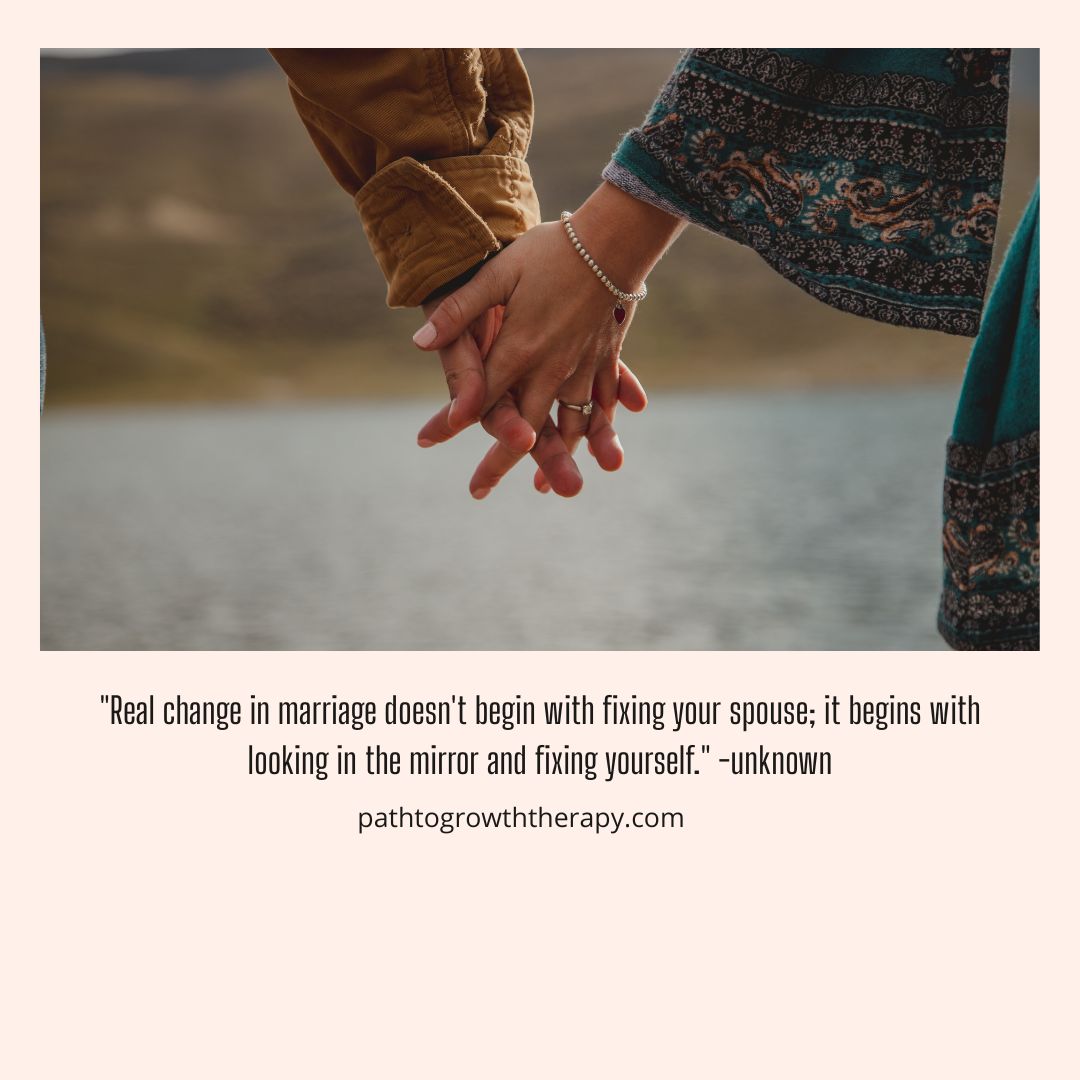
You cannot change your partner. But you can change how you show up, how you respond, and what you model in difficult moments. Those shifts often create new openings that weren’t there before. Some partners who initially refused counseling become more open after witnessing genuine change in their spouse.
Relationship counseling services in Colorado aren’t just about fixing a couple. They’re about supporting you, your clarity, your communication, your sense of self regardless of what your partner decides.
If your partner isn’t ready, that doesn’t mean you have to wait. Growth begins with one person deciding to start.
How Intensive Couples Therapy Creates Breakthroughs
For couples who are both willing to engage but feel stuck cycling through the same arguments, hitting the same walls the traditional weekly session model sometimes isn’t enough to generate real momentum.
This is where intensive couples therapy in Colorado offers something different. Rather than 50 minutes per week, an intensive format dedicates a full day or multiple days to focused, uninterrupted work on the relationship.
This depth allows couples to move past the surface layer past the latest argument, past the familiar talking points and into the territory that actually drives the patterns: attachment wounds, unspoken grief, unmet needs that have never been named clearly.
Intensive therapy is particularly valuable for couples who have been in weekly therapy and reached a plateau, those navigating a specific crisis like infidelity or a significant breach of trust, partners with demanding careers or schedules who struggle to sustain weekly appointments, and couples who feel they need a genuine turning point rather than incremental progress.
The immersive nature of an intensive creates space for the kind of breakthroughs that weekly work rarely reaches in the same timeframe.
What Individual Therapy Offers You, Regardless of Outcome
Whatever happens in your marriage, you are a person inside it not just a partner. Your nervous system, your sense of self, your wellbeing deserve care independent of what the relationship does or doesn’t become.
Individual therapy alongside couples work is one of the most powerful investments a person can make not because it replaces the couple’s work, but because it deepens it. Healing your own patterns, early wounds, and the narratives you carry about yourself changes what you bring into every interaction with your partner.
Many of the patterns that strain marriages over-functioning, people-pleasing, emotional shutdown, impulsive escalation have roots that go far deeper than the relationship itself. EMDR, ART, and trauma-informed individual therapy can help you work on those roots in ways that benefit you regardless of the outcome.
It’s also worth examining whether perfectionism or the relentless internal pressure many high-achievers carry is showing up in how you relate to your partner, a connection many people don’t immediately make, but one that often matters significantly.
Taking the First Step
Marriages rarely improve through one pivotal conversation. They improve through consistent, small, honest efforts repeated over time better listening, cleaner communication, quicker repair, greater self-awareness.
Taking the first step toward counseling isn’t an admission that your marriage has failed. It’s a reflection of how seriously you take it.
Here’s a simple way to begin:
Get honest about whether both partners are genuinely willing. Not performatively truly. Have a real conversation about what trying would actually require from each of you.
Find a therapist who fits your reality. Someone direct, experienced in evidence-based approaches, and willing to name what’s actually happening rather than simply reflecting it back at you. At Path to Growth Therapy, sessions are tailored, real, and built for people who are serious about change not those looking for validation of the status quo.
Consider an intensive if weekly feels too slow. If you need momentum or have hit a plateau, a couples intensive can compress meaningful progress into a focused experience and give you far greater clarity about where you both stand.
Don’t neglect yourself in the process. Your growth matters separate from the marriage. Pursue support for yourself alongside any couples work you pursue together.
Give genuine effort a real window then reassess. With a skilled therapist helping you evaluate honestly, you’ll be able to see whether movement is happening and what your next step should be.
Frequently Asked Questions
1. Can counseling help my marriage if my partner refuses to attend?
Yes. When one partner develops healthier communication habits, greater emotional awareness, and a clearer understanding of their own patterns, those changes influence the relationship dynamic even without the other person present. Individual counseling is a meaningful starting point regardless of your partner’s readiness.
2. How long does couples therapy usually take?
There’s no single answer, because every relationship is different. Some couples experience meaningful shifts within a few months of consistent work. Others benefit from longer engagement, particularly when patterns are deeply established or trust has been significantly damaged. An intensive format can accelerate progress considerably for couples who are ready to go deep.
3. What if my partner agrees to therapy but isn’t really engaged?
This is worth naming directly with your partner and with your therapist. Performative attendance without genuine engagement won’t produce real change. A skilled therapist can help surface this dynamic and address it directly, which is sometimes itself a turning point.
4. Is it too late to try if we’ve been struggling for years?
Not necessarily. The length of the struggle matters less than the presence of genuine willingness to engage with the work now. Couples who have been in pain for years have sometimes made meaningful change once the right support was in place. The key question is always whether both people are truly willing to try.
5. When should I consider relationship counseling in Colorado?
Consider reaching out when communication has become consistently difficult, emotional distance continues to grow, trust has been damaged, or the same conflicts keep repeating without resolution.
Final Thoughts
There is no universal timeline for fixing a marriage. But there is a meaningful difference between staying and trying and understanding that difference is often the most important first step.
If you’re showing up, doing the work, and investing genuinely in the process, that effort deserves to be supported well. And if you’re carrying the weight alone, or wondering whether what you’re doing actually constitutes trying, that deserves honest exploration too.
At Path to Growth Therapy, individuals and couples receive direct, compassionate, and evidence-based support not to tell you what your marriage should be, but to help you gain the clarity, skills and self-understanding to make that decision for yourself.
Whether you’re starting on your own or ready to begin together, Sheila is here to support you. Schedule your free 15-minute consultation and take the first step toward the relationship and the life you actually want.
Leave a Reply Cancel reply
| Originally DESIGNED BY ADP
© 2026 PATH TO GROWTH THERAPY
| Privacy Policy
HOURS: Sundays 8 AM-1 PM
Monday 10 AM-3 PM
Tuesday 10 AM-3 PM
Wednesday 10 AM-3 PM
Thursday 10 AM-12 PM (varied)
Fridays/Saturdays Closed/Intensives Only
Limited Availability outside these hours.
REVIEW US HERE
(970)-344-9177
pathtogrowththerapyllc@gmail.com
| Website Disclaimer
| Terms

