
COLORADO
WASHINGTON
EMDR/ART Therapy-Denver
EMDR Trauma Therapy-Washington
EMDR/ART Therapy-Fort Collins
Couples Therapy/Discernment-Denver
Couples Therapy/Discernment-Ft Collins
Couples Therapy-Seattle
How to Stop Repeating the Same Argument in Your Relationship

Work With Me
a licensed professional counselor with 15 years of experience in the field. I earned my B.S. in Psychology and Master’s in Counseling from Colorado State University and am the proud owner of Path to Growth Therapy and Trabelsi Coaching & Consulting.
I provide therapy for individuals and couples across Colorado and Washington, and mindset coaching and consulting services to clients worldwide. My specialties include grief, trauma, anxiety, life transitions, and relationship challenges. With a strengths-based, trauma-informed, and action-oriented approach, I help clients move beyond challenges and step into lasting healing and growth.

Meet Sheila
August 6, 2026
Table of Contents
- Why Couples Keep Having the Same Fight
- How Attachment Styles Fuel Repetitive Conflict
- The Real Issue Is Rarely the Surface Topic
- How to Recognize Your Conflict Cycle
- Practical Steps to Break the Pattern
- When One Partner Isn’t Ready to Change
- When to Consider Professional Support
- Frequently Asked Questions
- Final Thoughts
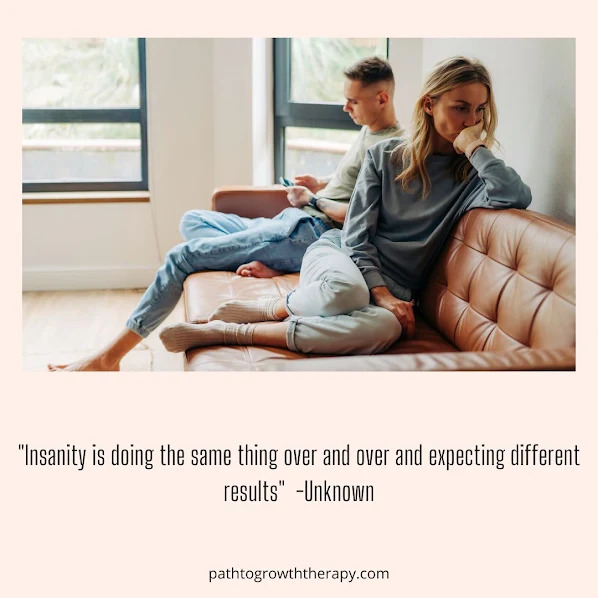
Most couples don’t argue about dozens of different things. They argue about the same one or two things, dressed up in different clothes. The dishes, the in-laws, being late, money, screen time the topic changes, but the fight feels identical every time. If that sounds familiar, you’re not imagining it, and you’re not alone.
Why Couples Keep Having the Same Fight
Repeated arguments usually aren’t about the subject on the surface. They’re about an underlying need that isn’t being met; feeling heard, feeling respected, feeling like a priority, or feeling safe. Once a couple falls into a pattern of responding to that unmet need in the same way each time, the fight becomes a script both partners know by heart, even if neither of them likes how it ends.
These patterns often form because:
- Neither partner feels fully heard, so the same complaint keeps resurfacing.
- One partner withdraws while the other pursues, creating a chase-and-retreat cycle.
- Old wounds or attachment patterns get triggered by small, everyday moments.
- The conversation focuses on winning the argument instead of understanding each other.
How Attachment Styles Fuel Repetitive Conflict
The way you learned to handle closeness, distance, and conflict early in life often shows up again in your adult relationships, especially during arguments. If you tend to move toward your partner when things feel tense, seeking reassurance or resolution, you may lean anxious in your attachment style. If you tend to pull back, go quiet, or need space before you can talk, you may lean more avoidant. Neither response is wrong, but when an anxious and avoidant style pair up, the same fight can repeat endlessly, because one partner’s need for closeness triggers the other partner’s need for distance, and vice versa.
Recognizing your own attachment pattern, and your partner’s, can change how you interpret conflict. Instead of “they don’t care,” it becomes “they need space to process.” Instead of “they’re too needy,” it becomes “they need reassurance that we’re okay.” Working through trauma or attachment patterns with support, like the online individual therapy offered at Path to Growth Therapy, can help you understand where these responses come from and how to respond differently the next time conflict arises.
The Real Issue Is Rarely the Surface Topic
If you and your partner have the “you never help around the house” fight for the fortieth time, the real issue usually isn’t the dishes. It might be a deeper feeling of being unappreciated or carrying more than your share. Looking beyond today’s disagreement and asking what pattern keeps repeating is often more useful than trying to settle who’s right.
Helpful questions to ask yourselves:
- What need isn’t being expressed directly in this fight?
- What happens right before the conflict escalates?
- What role do I play in keeping this pattern going?
How to Recognize Your Conflict Cycle
Every recurring fight tends to follow a predictable rhythm. Learning to spot it in the moment; instead of only after the fact, is the first step toward interrupting it.
Common cycles include:
- Pursue-withdraw: One partner pushes for connection or resolution while the other shuts down or leaves the room.
- Escalation: A minor comment quickly turns into raised voices or bringing up unrelated past conflicts.
- Silent resentment: Nothing is said in the moment, but frustration builds until it erupts over something small.
Recognizing your own cycle takes honest reflection, and it’s often easier to see with support from someone outside the relationship.
Practical Steps to Break the Pattern
Change rarely comes from one big conversation. It comes from small, consistent shifts repeated over time.
- Pause before reacting. Notice the early signs of escalation and take a break before responding.
- Name the pattern out loud. Saying “we’re doing the thing again” can interrupt the cycle before it takes over.
- Focus on the need, not the complaint. Instead of “you always ignore me,” try “I need to feel like a priority.”
- Practice listening without preparing your rebuttal. Understanding your partner’s perspective doesn’t mean agreeing with it.
- Set a boundary around how conflict happens, even if you can’t resolve the topic itself right away.
Learning how emotional regulation supports healthier communication can also help you stay grounded during difficult conversations instead of reacting on autopilot.
When One Partner Isn’t Ready to Change
Sometimes only one partner is motivated to break the cycle, and that’s still meaningful. When one person changes how they communicate, respond, and show up in conflict, it often shifts the entire dynamic, even before the other partner is ready to engage differently. Starting with your own patterns, rather than waiting for your partner to change first, is one of the most effective ways to create movement in a stuck relationship.
When to Consider Professional Support
If the same fight keeps resurfacing despite your best efforts, it may be a sign that the pattern runs deeper than either partner can untangle alone. This is often where couples benefit from structured support that helps both people slow down, understand the cycle, and build new ways of responding to each other.
Our couples intensives are designed specifically for partners who feel stuck in repetitive conflict and want focused, accelerated support to break the pattern. For couples who want to go even deeper in a condensed timeframe, our therapy intensives offer extended sessions built for meaningful, lasting change. And if you’re unsure whether individual or couples support is the right starting point, our individual therapy services can help you understand your own role in the pattern first.
Frequently Asked Questions
1. Is it normal for couples to have repeated fights?
Yes. Most couples have one or two recurring conflict themes. What matters more than the topic itself is whether the pattern is getting worse over time or whether you’re both building better ways to navigate it.
2. Can we break the cycle without a therapist?
Some couples can shift their patterns with intentional effort, honest communication, and consistency. Others find it helpful to have a neutral third party help them see the cycle clearly, since it can be difficult to recognize your own role in a pattern from the inside.
3. What if my partner won’t acknowledge there’s a pattern?
You can still make progress. Working on your own responses and communication, even individually, often changes the dynamic enough to create an opening for your partner to engage differently.
4. How long does it take to break a recurring fight pattern?
It varies. Some couples notice a shift in a few focused sessions, especially through an intensive format, while others need more time depending on how long the pattern has been in place.
5. Why do we keep having the same argument even after we “resolve” it?
Because the surface topic gets addressed, but the underlying need or pattern driving the fight doesn’t. Until that root cause is identified and worked through, the same conflict tends to resurface in a new form.
Final Thoughts
The same fight, over and over, isn’t a sign your relationship is broken. It’s a sign there’s a pattern underneath it that hasn’t been fully understood yet. With the right insight and support, that pattern can change.
If you and your partner are ready to stop repeating the same argument and start understanding what’s really going on beneath it, book a complimentary 15-minute consultation or contact us to take the first step with Path to Growth Therapy today.
Leave a Reply Cancel reply
| Originally DESIGNED BY ADP
© 2026 PATH TO GROWTH THERAPY
| Privacy Policy
HOURS: Sundays 8 AM-1 PM
Monday 10 AM-3 PM
Tuesday 10 AM-3 PM
Wednesday 10 AM-3 PM
Thursday 10 AM-12 PM (varied)
Fridays/Saturdays Closed/Intensives Only
Limited Availability outside these hours.
REVIEW US HERE
(970)-344-9177
pathtogrowththerapyllc@gmail.com
| Website Disclaimer
| Terms

