
COLORADO
WASHINGTON
EMDR/ART Therapy-Denver
EMDR Trauma Therapy-Washington
EMDR/ART Therapy-Fort Collins
Couples Therapy/Discernment-Denver
Couples Therapy/Discernment-Ft Collins
Couples Therapy-Seattle
What If Only One Partner Wants Counseling? How Relationship Counseling Services in Colorado Can Help

Work With Me
a licensed professional counselor with 15 years of experience in the field. I earned my B.S. in Psychology and Master’s in Counseling from Colorado State University and am the proud owner of Path to Growth Therapy and Trabelsi Coaching & Consulting.
I provide therapy for individuals and couples across Colorado and Washington, and mindset coaching and consulting services to clients worldwide. My specialties include grief, trauma, anxiety, life transitions, and relationship challenges. With a strengths-based, trauma-informed, and action-oriented approach, I help clients move beyond challenges and step into lasting healing and growth.

Meet Sheila
July 10, 2026
Table Of Content
- Why Partners Often See the Relationship Differently
- Why Starting Alone Can Still Be Valuable
- Small Changes Often Lead to Bigger Improvements
- What You Can Gain From Individual Counseling
- When Your Partner Says “I Don’t Need Therapy”
- Looking Beyond Today’s Conflict
- Finding the Right Therapist
- Growth Begins With One Step
- Frequently Asked Questions
- Conclusion
Every relationship faces challenges, but not every couple recognizes those challenges at the same time. It’s common for one partner to feel ready to seek help while the other believes things will improve on their own or simply isn’t comfortable with the idea of counseling.
If this sounds familiar, you’re not alone.
Many people hesitate to reach out because they believe counseling only works if both partners attend every session. While couples counseling can be valuable, that’s not the only path toward positive change. In many situations, taking the first step on your own can lead to healthier communication, greater self-awareness, and a better understanding of your relationship.
Seeking relationship counseling in Colorado is not about convincing your partner to change. Instead, it’s an opportunity to understand yourself, strengthen the way you respond to challenges, and develop skills that support healthier relationships.
Why Partners Often See the Relationship Differently
No two people experience the same relationship in exactly the same way.
One partner may notice growing emotional distance, while the other feels that life’s daily responsibilities are simply creating temporary stress. Different personalities, communication styles, and past experiences all influence how people view relationship concerns.
Someone may hesitate to begin counseling because they:
- Feel uncomfortable discussing personal matters.
- Believe asking for help is a sign of failure.
- Think the relationship is “good enough.”
- Worry about being blamed.
- Have never experienced therapy before.
These concerns are understandable. In many cases, hesitation comes from uncertainty rather than a lack of commitment to the relationship.
Why Starting Alone Can Still Be Valuable
One of the biggest misconceptions about counseling is that progress only happens when both partners participate.
Healthy relationships are influenced by the choices each person makes every day. When one partner learns healthier communication habits, develops greater emotional awareness, and approaches conflict differently, those positive changes often influence future interactions.
Instead of trying to control another person’s behavior, counseling helps you focus on the only person you can truly change, yourself.
Many individuals discover they become more confident during difficult conversations, communicate more clearly, and respond with greater patience instead of frustration. Those improvements often create opportunities for more productive conversations at home.
Small Changes Often Lead to Bigger Improvements
Relationships rarely change because of one major conversation. More often, they improve through small, consistent actions repeated over time.
Simple changes may include:
- Listening without interrupting.
- Expressing concerns calmly.
- Taking time to understand your partner’s perspective.
- Recognizing emotional triggers before reacting.
- Setting healthy boundaries with respect.
Although these habits may seem simple, they create an environment where healthier communication becomes possible.
Learning how emotional regulation strengthens relationships can also help you stay present during challenging conversations instead of reacting impulsively. For many couples, this becomes an important step toward rebuilding trust and understanding.
What You Can Gain From Individual Counseling
Many people begin therapy hoping to improve their relationship. Along the way, they often discover personal benefits that extend into every area of life.
Counseling provides a safe space to explore patterns that may have developed over many years. You may begin to notice how stress, past experiences, or communication habits influence your relationships today.
During counseling, you may work on:
- Building healthier communication skills.
- Managing stress more effectively.
- Improving self-confidence.
- Understanding emotional responses.
- Creating realistic relationship expectations.
- Developing healthier boundaries.
These skills not only support romantic relationships but also improve connections with family members, friends, and colleagues.
When Your Partner Says “I Don’t Need Therapy”
Hearing a partner refuse counseling can feel discouraging.
However, it’s important to remember that people become ready for change at different times.
Rather than trying to convince your partner through repeated arguments, focus on sharing your own reasons for seeking support. Explain that counseling is not about finding someone to decide who is right or wrong. Instead, it is an opportunity to better understand yourself and improve the way you communicate.
Giving your partner space to process the idea often leads to more productive conversations than applying pressure.
Some individuals become more open to counseling after seeing positive changes in their partner’s communication, confidence, and emotional well-being.
Looking Beyond Today’s Conflict
When emotions are high, it is easy to focus only on the latest disagreement.
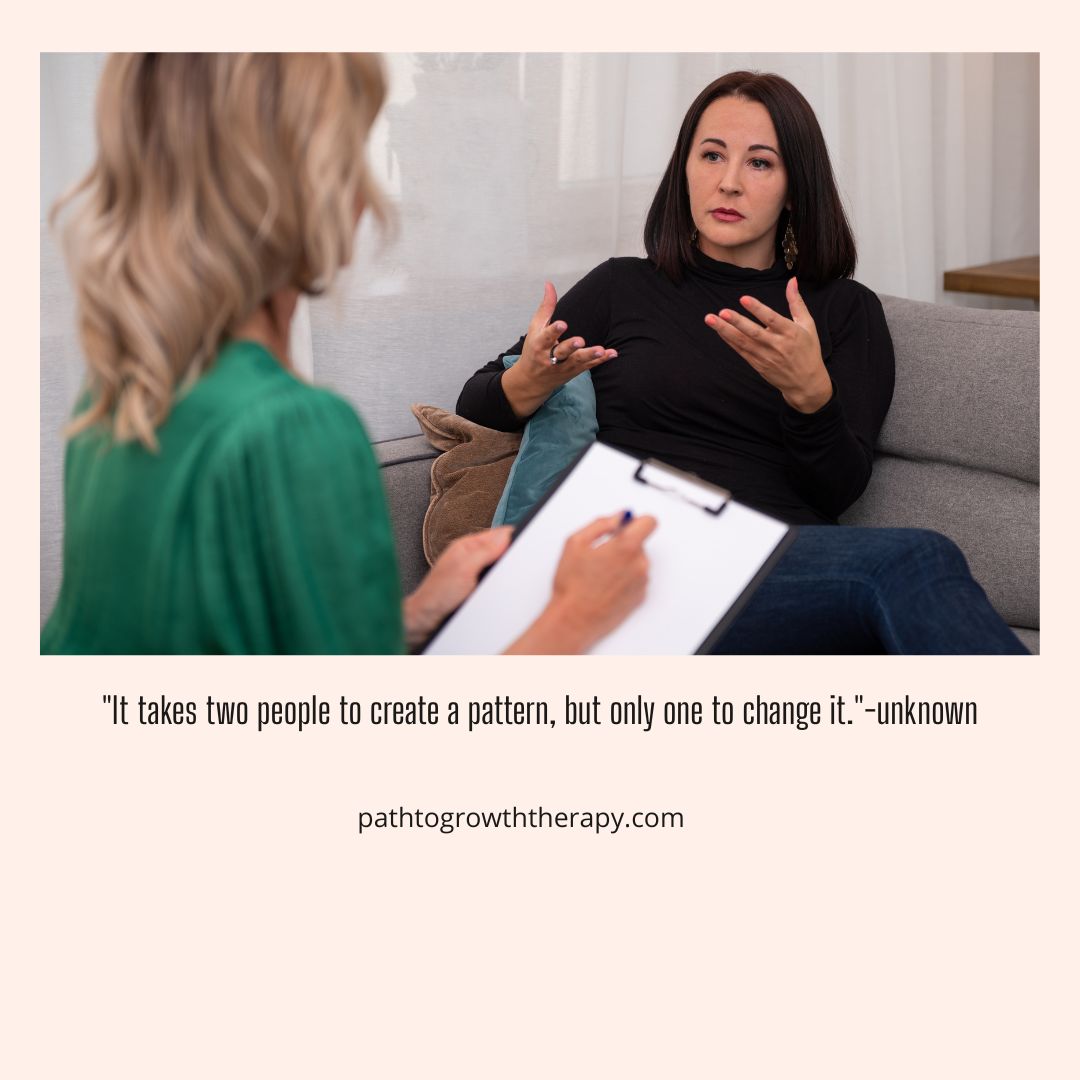
A counselor helps you step back and look at the bigger picture. Instead of asking, “Who started this argument?” therapy encourages questions such as:
- What patterns continue repeating?
- What needs are not being expressed?
- What communication habits create distance?
- What changes are within my control?
Answering these questions often provides greater clarity than focusing on individual disagreements.
For couples who feel uncertain about the future of their relationship, understanding discernment counseling can help couples make thoughtful relationship decisions and may also provide valuable perspective before making life-changing choices.
Finding the Right Therapist
Choosing a therapist is an important step, whether you attend counseling individually or eventually invite your partner to join.
Look for a licensed professional who has experience supporting individuals and couples through relationship challenges. A good therapist creates a welcoming environment where you can speak openly without fear of criticism or judgment. It’s also helpful to find someone who explains the counseling process clearly and encourages realistic, achievable goals instead of quick fixes. Feeling comfortable with your therapist allows trust to develop, making each session more productive.
Growth Begins With One Step
Relationships rarely improve overnight.
Meaningful change usually happens through consistent effort, honest conversations, and a willingness to learn healthier ways of communicating. Taking the first step toward counseling is not an admission that your relationship has failed. It reflects a commitment to understanding yourself and improving the quality of your relationships.
At Path to Growth Therapy, individuals and couples receive compassionate support designed to strengthen communication, increase emotional awareness, and build healthier relationship patterns. Every relationship is unique, and counseling provides a respectful space to explore concerns at a pace that feels comfortable.
Remember that progress is not measured by perfection. It is measured by the small choices you make each day to communicate more openly, listen more carefully, and respond with greater understanding.
Sometimes one person’s decision to seek support becomes the beginning of positive change for both partners.
Frequently Asked Questions
1. Can counseling help if my partner refuses to attend?
Yes. Individual counseling helps you improve communication, manage emotions, and better understand relationship patterns. These changes often have a positive effect on your relationship, even if your partner chooses not to participate.
2. Should I keep asking my partner to attend counseling?
It’s usually more helpful to explain why counseling matters to you without applying pressure. Respectful conversations often create greater openness than repeated attempts to convince your partner.
3. Can trust be rebuilt after betrayal?
Yes, but it takes time and consistent effort rather than a single conversation. Trust rebuilds through small, repeated actions—honesty, follow-through, and open communication. Individual counseling can help you process the betrayal and decide what you need moving forward, even if your partner isn’t ready for joint sessions yet.
4. Is staying together for the kids the right choice?
There’s no universal answer. Instead of deciding in the heat of conflict, it helps to step back and ask what patterns keep repeating and what’s within your control. Discernment counseling can offer clarity on whether the relationship has a path forward, for your sake and your children’s.
5. What if I’m emotionally checked out?
Feeling disconnected doesn’t always mean the relationship is over. It often points to unaddressed patterns or unmet needs. Starting counseling on your own can help you understand where the distance is coming from and whether reconnecting is possible.
6. Can one person’s changes really improve a relationship?
They often can. Healthier communication, emotional awareness, and better conflict management may influence relationship dynamics and encourage more positive interactions between both partners.
Conclusion
It is natural to feel discouraged when your partner is not ready for counseling. However, that does not mean positive change is impossible.
By focusing on your own growth, improving the way you communicate, and seeking professional support when needed, you can develop skills that benefit both your personal well-being and your relationship.
Whether your partner decides to join counseling later or not, taking that first step allows you to move forward with greater clarity, confidence, and understanding.
If you’re ready to explore your options, Sheila is here to support you. Our team provides relationship counseling services in Colorado in a respectful, supportive environment where you can discuss your concerns and work toward healthier communication and stronger relationships.
Contact us today to schedule a 15-minute consultation and take the first step toward building the relationship you want, whether you’re starting on your own or planning to begin counseling together.
Leave a Reply Cancel reply
| Originally DESIGNED BY ADP
© 2026 PATH TO GROWTH THERAPY
| Privacy Policy
HOURS: Sundays 8 AM-1 PM
Monday 10 AM-3 PM
Tuesday 10 AM-3 PM
Wednesday 10 AM-3 PM
Thursday 10 AM-12 PM (varied)
Fridays/Saturdays Closed/Intensives Only
Limited Availability outside these hours.
REVIEW US HERE
(970)-344-9177
pathtogrowththerapyllc@gmail.com
| Website Disclaimer
| Terms

